Sequence · Reception → Report
One patient, one line,
no retyping.
Every role in the centre works on the same record — the booking made at the
desk is the study the machine scans, the case the radiologist reads, and the report the
referrer receives.
Reception
Register the patient
Name, procedure, referring doctor, slot — the booking appears on every worklist and is
published as a DICOM Modality Worklist, so it's on the scanner before the patient is.
CT / MRI console
The machine pulls the booking
The technologist selects the patient on the console itself. Name, ID and accession come
from RadX — nothing is typed at the machine, nothing can mismatch.
Scanner → RadX
Images arrive on their own
The study is pushed over the DICOM network as soon as it's acquired and matched to the
booking by accession number. Drag-and-drop and ZIP import stay available for outside films.
Technician · Radiologist
Assign and read
Cases go to a radiologist, who reads in RadX's browser viewer — multi-pane layouts, MPR,
MIP/MinIP, fusion, crosshair localisation, measurements, and keyboard shortcuts they can remap.
AI second reader
AI reviews alongside
Candidate findings with confidence scores appear beside the images. The radiologist accepts
or rejects each one; accepted findings compose into a draft in their own reporting style.
Radiologist
Sign with a digital signature
Structured report, templates, autosave, dictation. Sign-off stamps the radiologist's
signature with date and time; a 7-day window allows corrections, then the report locks.
Everyone
Deliver in one click
The signed report lives on the platform — send a secure link to the study and report
to the referring doctor or the patient, print on the centre's letterhead, or export
to Word.
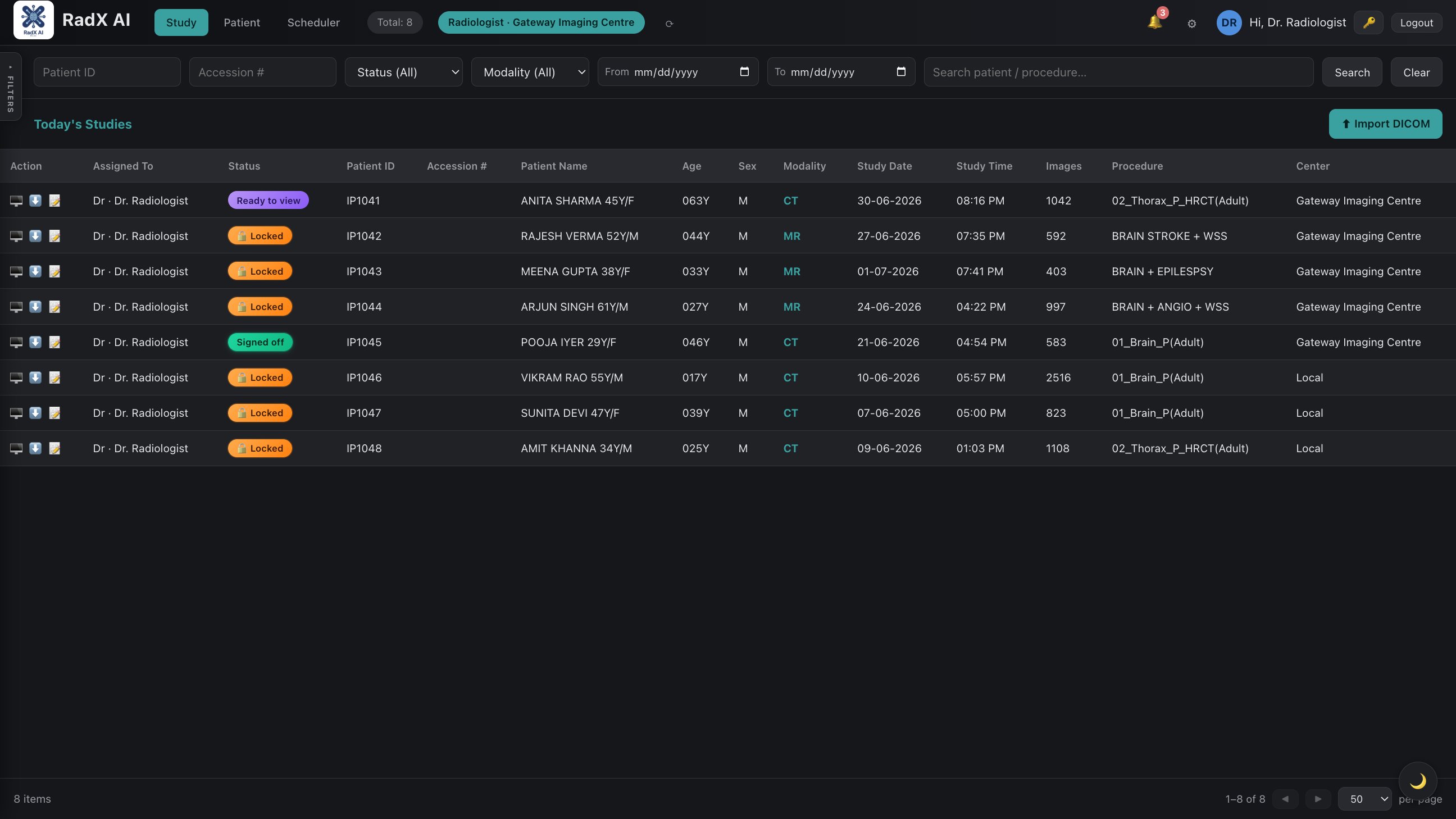
The worklist the whole centre runs on
Scheduled → Signed off
Live status for every study, per-radiologist assignment, filters by patient,
accession, modality and date — with scans arriving from the machine, a folder, or a ZIP.
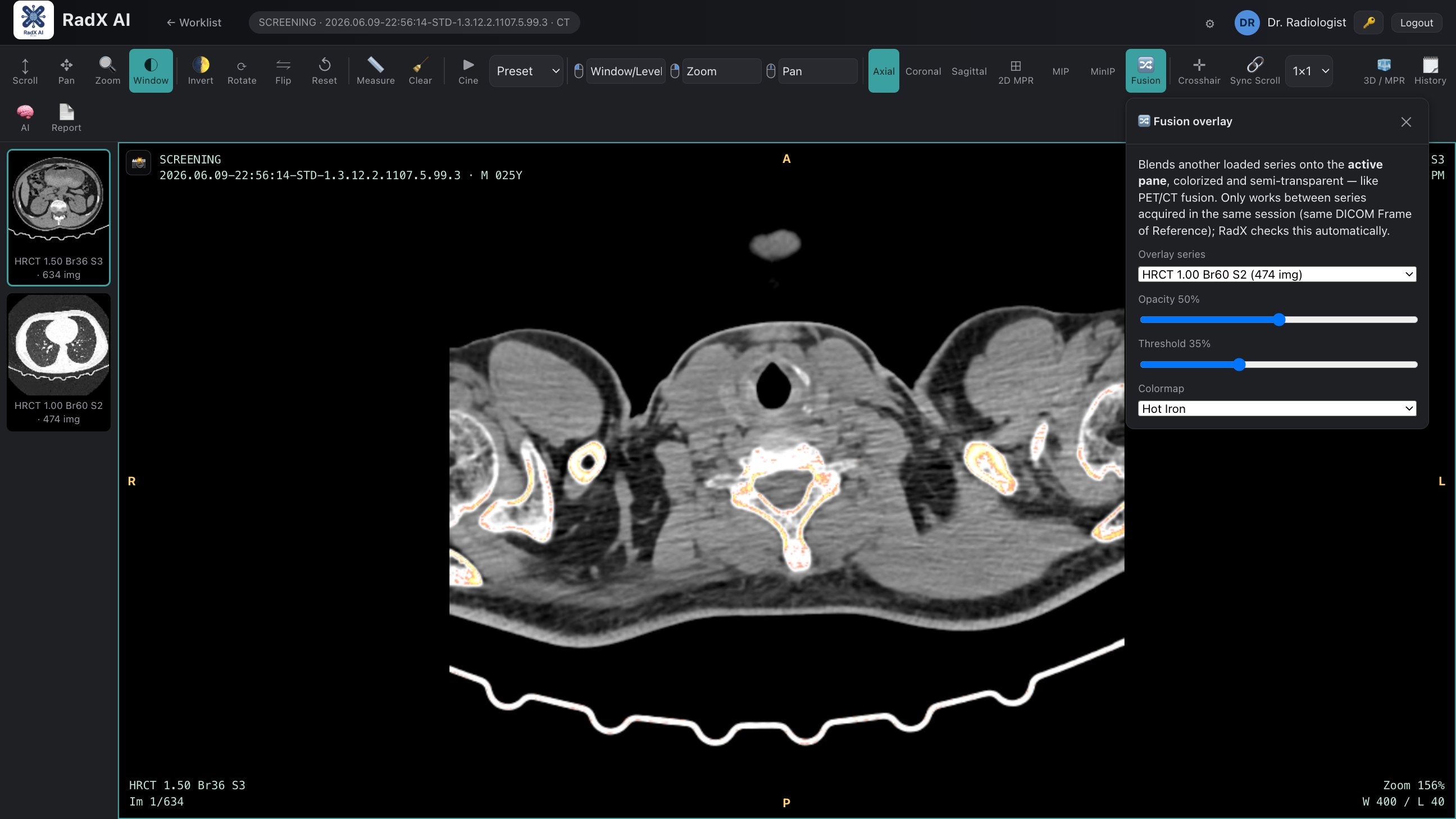
A viewer that keeps up with your PACS
MPR · crosshair · fusion
Axial, coronal and sagittal reformats built in the browser; click a point and the
crosshair localises the same anatomy in every plane. Slab MIP/MinIP, PET/CT-style fusion, and
any slice captured straight into the report.
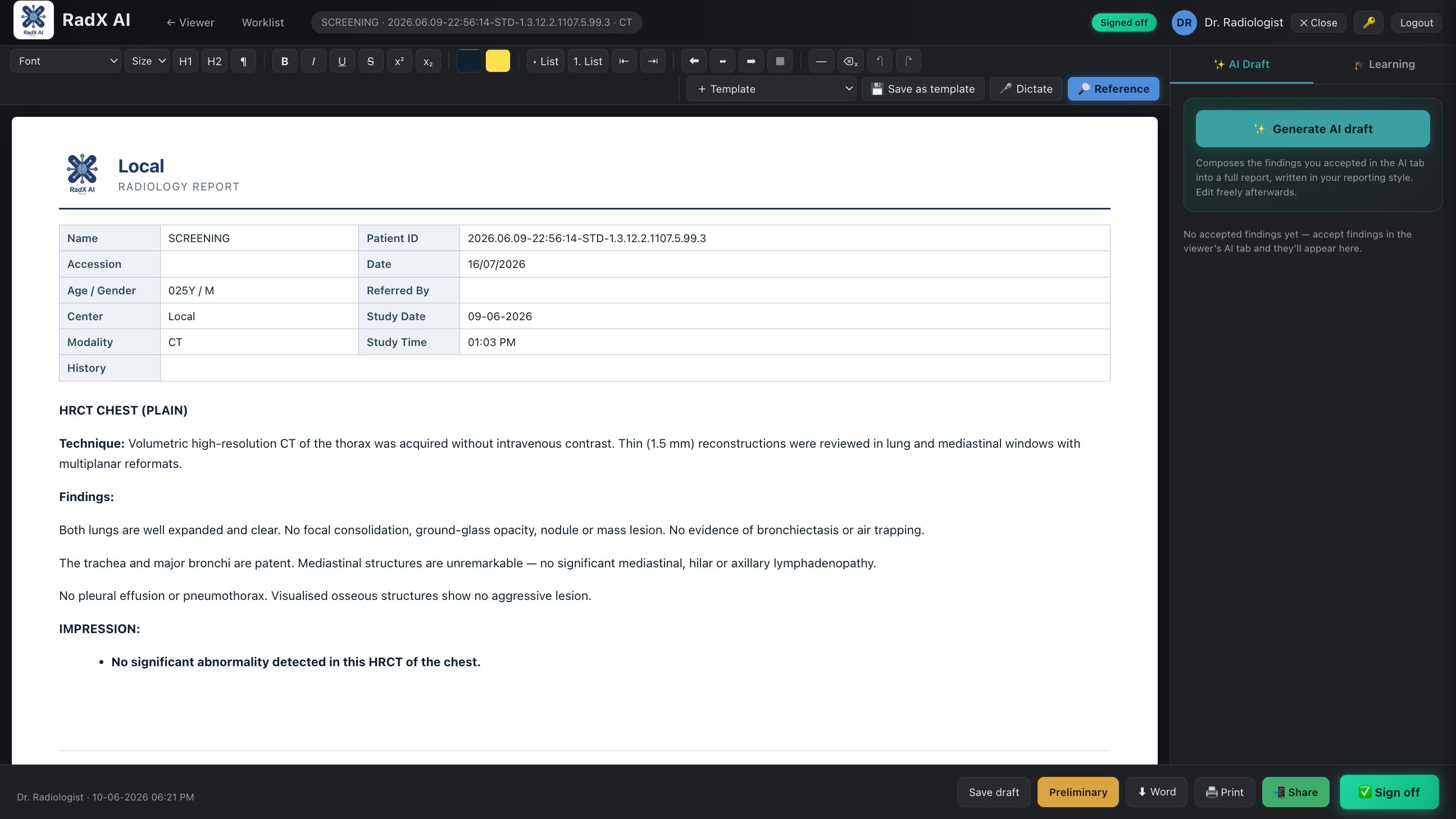
Reports that write themselves — almost
Draft → sign → share
Accepted findings become a draft in your own words. Your templates, Radiopaedia
and PubMed search beside the draft, Word export, print, and secure share links.